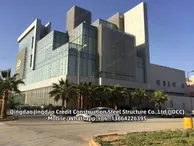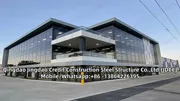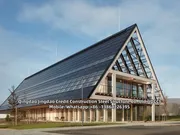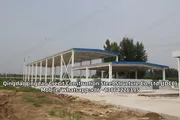



Prefab Modular Resort Building
There are numerous advantages to employing this prefab modular building in a hotel or resort development project. Below are the three main benefits, which apply to both steel and wood-framed modular units.
SEND INQUIRY


Product details
Prefab Modular Resort Building
There are numerous advantages to employing this prefab modular building in a hotel or resort development project. Below are the three main benefits, which apply to both steel and wood-framed modular units.
Reduced Construction Time: Modular units are delivered to the site pre-assembled and pre-finished, then stacked. Construction time can be reduced significantly, compared with conventionally built structures. This is especially important in dense urban areas, where traffic disruption and noise mitigation equate to significant costs.
Higher Quality: By building and finishing modular units in a factory under controlled conditions, final product quality can be enhanced with a more precise fitting of components, and repetitive installation and finishing performed in a dry, climate-controlled environment.
Less Cost and Waste: With reduced waste, reduced construction time, and completion of assembly and installation in a controlled environment, the possibilities for cost savings are compelling. Additionally, these cost savings often result in a “green” advantage for the project.
Modular construction is frequently touted as a time-saver. Time is money in construction, in terms of equipment rental, manpower, and lost revenue. With this method, contractors can stack multiple modules per day, potentially reducing total construction duration by a significant amount. The challenge with the various phases of this process—namely design, permitting, fabrication, inspection and coordination—is planning ahead. A lot of developers want to get in the ground quickly, but with modular, there’s a lot of upfront legwork and planning that needs to happen. Time savings is an easy advantage to latch onto with modular, but there’s going to be more planning required. If you don’t start planning earlier, you will likely finish later, even with the shortened construction time.
There’s a common perception that building modular offers cost savings versus a traditional construction approach. However, there are many nuances that the owner and/or cost estimator needs to understand in order to skillfully develop a reliable cost comparison. The fact that modular units are pre-manufactured can require cash flows to be more front-loaded than conventionally constructed projects. This will depend on the payment structure agreed upon with the fabricator. The modular structure itself also differs significantly from its traditionally built counterparts, in terms of material (most hotel structures are concrete), erection process, and building components. Even though many components may have the same material costs, they could have very different installation costs, based on the differing location.
Modular construction is a process in which a majority (or portion) of the building is fabricated off-site under factory controlled conditions. The building is manufactured in pieces called "modules" that each include completed structure, mechanical, electrical, plumbing, furniture, fixtures, & equipment, and exterior and interior finishes.
These modules are then transported to site where they are stacked (typically using cranes), sealed, and connected to mechanical, electrical, and plumbing (by general contractor crews) to form the completed building structure. Modular structures must adhere to the same building codes that conventionally built structures do, in addition to others which I will cover later.
There are 2 main types of modules: “Room Pods” and “Structural Modules”. Room Pods are prefabricated building components integrated into traditional, on-site construction projects (ie: bathroom pods), while structural modules must support the weight of the building and are much more complex.
Contact us for your next project and we’ll be happy to asssist you!