


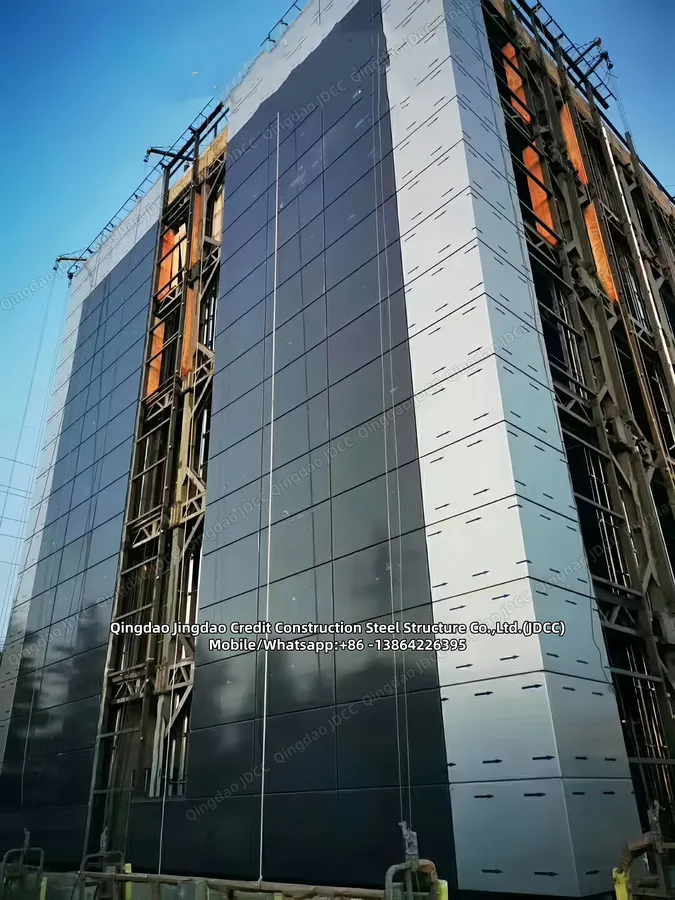
Glass Wall Steel Structure Building
With high-rise architectural marvels dotting the urban skyline, concrete does not support a vast range of functions. Worse still, concrete adds to the weight, does not provide space for creativity and, in one sense, is ugly. In vertical development, weight of the building as a...
SEND INQUIRY


Product details
Glass Wall Steel Structure Building
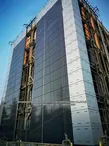
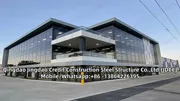
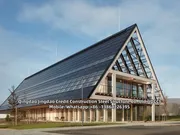
With high-rise architectural marvels dotting the urban skyline, concrete does not support a vast range of functions. Worse still, concrete adds to the weight, does not provide space for creativity and, in one sense, is ugly. In vertical development, weight of the building as also aesthetics play a significant role. Glass, with its qualities of flexibility and durability, is a preferred material for construction.
There are several other reasons as well:
One, being a lighter building material, glass reduces total building weight. The density of a brick wall can be up to 2000 kg/m3 while glass’ density is only around 2.51 g/cm3. In a typical high-rise building of 70 storeys with 90,000 m2 of glass area, the estimated weight reduction by using glass is 36,900 tonnes! That’s not a small number.
Two, glass has lower envelope thickness that saves up to 8 per cent of the construction area and, in turn, increases usable carpet area. This increase in carpet area makes glass exciting for residential buildings as well.
Three, glass is easy to install. In a day, about 150 m2 of glass façade can be built while only 70 m2 of brick wall can be constructed.
Glass can be fabricated in three types - Semi-Unitised system, Unitised System and Frameless Façade - based on needs. With its wide style and colours and also customisable properties, glass stimulates the architect’s ‘Imagineering’ and is the first choice construction material for urban high-rise buildings.
Though glass brings in an image of being brittle, technology has enabled it durable and seismic-resistant. Unlike concrete buildings that collapse, glass can be treated to withstand earthquakes. Analyses of impact of earthquakes world over showed that during earthquakes, concrete buildings crumbled to rubbles; but glass buildings suffered just a few minor cracks. So efficient is seismic-resistant glass!
Apart from these benefits, glass being a non-dirt absorbing material, is easy to clean and maintain. Unlike concrete buildings which require repainting every 5 years or earlier involving a huge spend, glass can be easily cleaned, instantly bringing back freshness.