Steel Structure Cinema Video
Leisure buildings include sports arenas, stadia, swimming pools, theatres, etc. and are ideally suited to steel construction. The sports and leisure sector is diverse with facilities of varying function and size being provided by local authorities, the education sector, sports...
Steel Structure Cinema Video
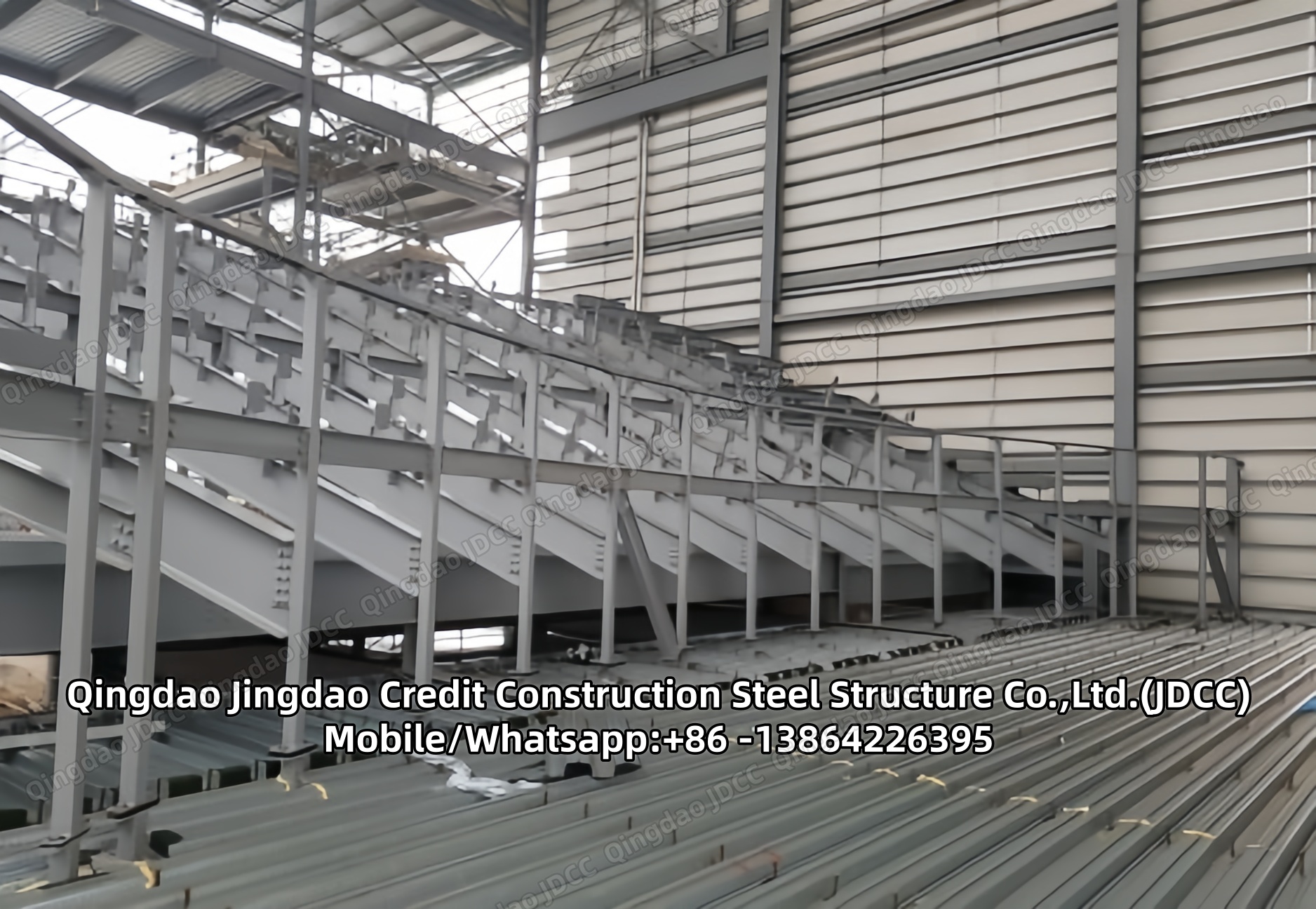
Leisure buildings include sports arenas, stadia, swimming pools, theatres, etc. and are ideally suited to steel construction. The sports and leisure sector is diverse with facilities of varying function and size being provided by local authorities, the education sector, sports bodies and the private sector.
Leisure structures range in size from relatively small buildings, such as gymnasia, to larger buildings such as stadia which may be capable of holding 80,000 people. Each project comes with its own challenges, opportunities and efficient structural solution. They have unique requirements within the construction sector, as most modern developments are now multi-functional and have an inherent requirement to be state-of-the-art and distinctive. Unlike other types of more generic buildings, leisure structures tend to be quite specialist and architecturally-driven with particular emphasis given to quality, function, flexibility and appearance. There is increasingly a focus on high levels of operational energy efficiency and use of renewable energy technologies in the leisure sector.
Several types of leisure buildings share many features with other buildings, such as single-storey buildings, educational buildings, etc.
The construction of new leisure facilities and the refurbishment of older venues tend to be relatively large-scale projects, which require major up-front investment. The project time-scales are usually quite long including planning, design and construction stages. In this context, an early return on investment is particularly important for leisure companies, local authorities and sports bodies and therefore speed of construction is vital. With many sports having a ‘closed’ part of the season or year, or important immovable annual events, speed of construction is often critical. The speed with which primary steel frames can be constructed and clad, allowing early commencement of the installation of services, has an important effect on the overall cost of the project.
Further examples of how construction time might be minimised are:
The layout and components can be designed so that parallel rather than sequential installation can take place
Ensuring that scheduling conflicts do not occur between different trades during construction and fit-out
Interfaces with following activities, such as electronic equipment and other advanced communication services
Delivery and installation of elements are often carried out in a rapid time scale and with very little space available often confined by local buildings
Large components such as trusses, can be assembled on the ground before being craned into position.
Theatres and auditoria are generally smaller in capacity than the other categories covered in this article. However, the main design criteria remain unchanged: that is the requirement for long spans and uninterrupted space. Experience has shown that lightweight, easy-to-construct steel frames result in shorter construction periods as well as lower foundations costs. Given that the theatre and entertainment industry is very important to both society and the national economy speed of construction is vital as is being able to deliver projects within tight urban sites cost effectively.
Contact us for your next project and we’ll design and build it together!