Glass Curtain Wall Steel Frame Building Video
Glass Curtain Wall Steel Frame Building
Glass Curtain Wall Steel Frame Building Video
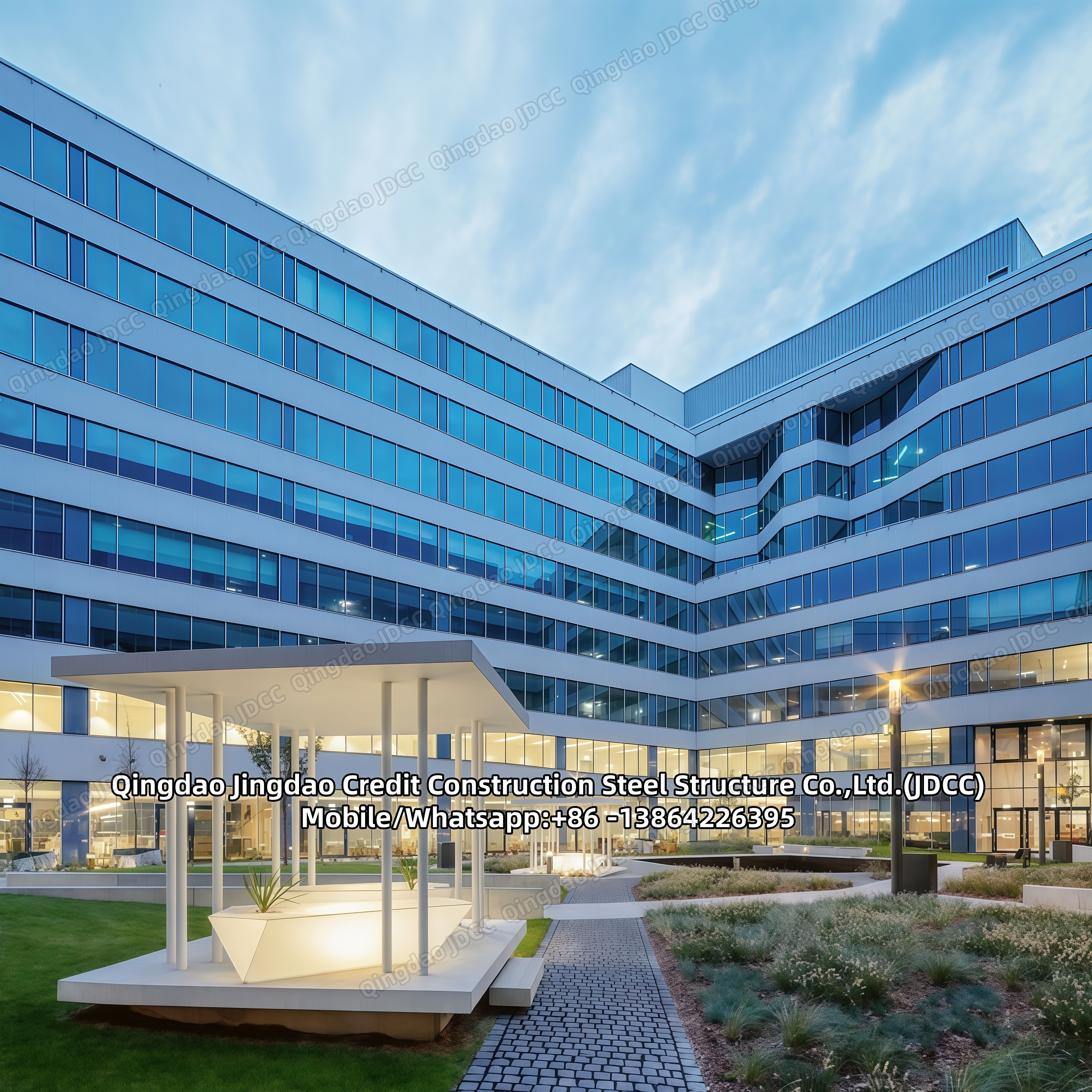
Glass Curtain Wall Steel Frame Building
Today, steel frame buildings that use more energy to stay cool are a major cause of unnecessary carbon emissions.
Glass, with its qualities of flexibility and durability, is a preferred material for construction.
There are several other reasons as well:
One, being a lighter building material, glass reduces total building weight. The density of a brick wall can be up to 2000 kg/m3 while glass’ density is only around 2.51 g/cm3. In a typical high-rise building of 70 storeys with 90,000 m2 of glass area, the estimated weight reduction by using glass is 36,900 tonnes! That’s not a small number.
Two, glass has lower envelope thickness that saves up to 8 per cent of the construction area and, in turn, increases usable carpet area. This increase in carpet area makes glass exciting for residential buildings as well.
Three, glass is easy to install. In a day, about 150 m2 of glass façade can be built while only 70 m2 of brick wall can be constructed.
Glass can be fabricated in three types - Semi-Unitised system, Unitised System and Frameless Façade - based on needs. With its wide style and colours and also customisable properties, glass stimulates the architect’s ‘Imagineering’ and is the first choice construction material for urban high-rise buildings.
For a builder, one of the biggest challenges when constructing a high-rise residential building is to ensure low energy consumption while providing a comfortable indoor environment for the occupants. By encouraging greater use of solar control glass for windows, a good solar-control glass is designed to reduce or prevent unwarranted solar heat from entering the building without sacrificing a comfortable environment for the occupants.
As windows contribute to a significant portion of the heat transfer in a building, the choice of glass plays a vital role in the total heat gain of the building. When choosing a glass for windows, a number of factors should be considered including, solar control, light transmission, color, sound insulation, safety properties, aesthetics, and thermal insulation.