Steel Construction Fabrication
Fabrication is the process used to manufacture steelwork components that will, when assembled and joined, form a complete frame. The frame generally uses readily available standard sections that are purchased from the steelmaker or steel stockholder, together with such items a...
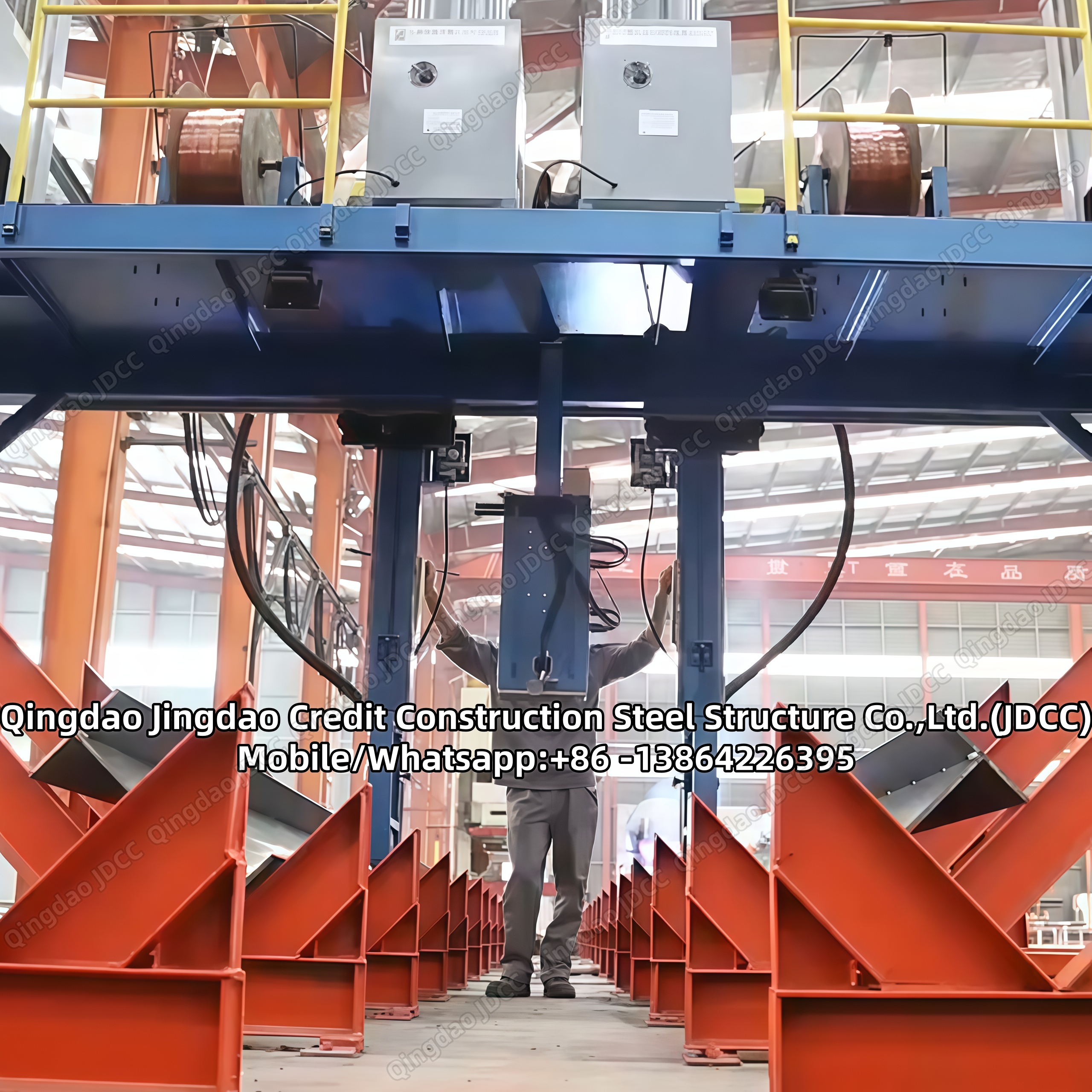
Steel Construction Fabrication - Products
Fabrication is the process used to manufacture steelwork components that will, when assembled and joined, form a complete frame. The frame generally uses readily available standard sections that are purchased from the steelmaker or steel stockholder, together with such items as protective coatings and bolts from other specialist suppliers.
Although a wide range of section shapes and sizes are produced, the designer may find that the required section size is not available. In this case, built-up girders may be fabricated from plate. Sections and plate girders may also be strengthened by stiffening the web or flanges depending upon the load to be carried.
Most modern steelwork fabrication factories have computer aided design and detailing (CAD) which is linked directly to factory floor computer numerically controlled (CNC) machinery creating a genuine CAD/CAM environment. The accuracy of the computer generated details being transmitted directly to the computer aided manufacturing (CAM) machinery increases the quality standards of production
The fact that machinery has taken over from the tape measure means that the frame is produced to high quality standards which are reflected in the speed and accuracy of steel erection on site. This results in significant benefits both to the client and main contractor.
Structural steelwork prices are influenced by the size of each individual piece (i.e. number of pieces per tonne), which is largely dependent on bay size. Consider larger bay sizes, where the extra weight due to longer spans may be totally offset by the reduced price per tonne and the saving in number of columns and related workmanship. Also the resultant column-free space generally adds value to a project.
Structural steel frames must have the required degree of lateral resistance to wind loads. This can be provided by a stiff core or by the frame itself - diagonal steel bracing is usually a less expensive solution than moment frames.
Fabrication is more economic with:
Single square end cuts
One hole diameter on any one piece avoids drill bit changes
Holes in flanges and webs aligned where possible
Web holes having adequate flange clearance
Rationalised range of fittings for connections
The use of a small range of standard bolts, e.g. M20 grade 8.8 for shear connections
Wherever possible, leave the choice of the connection detail to the steelwork contractor as the type and design of connections directly influences the total frame cost. Rationalise the range and tonnages of section sizes used.
Complex individualistic designs are going to cost more per tonne, even with modern CNC equipment. If you wish to keep costs down - keep it simple!